
Protein smoothies can do more than just help with post-workout recovery; they can work wonders for gut health, too. Blending up the right ingredients can give your digestive system some support and set you up for better overall health. In this article, I’m sharing what goes into a gut-friendly protein smoothie, how to pick the best protein for the job, and all kinds of simple tips to make your new smoothie routine work for you.
 Disclosure: This post contains affiliate links. As an Amazon Associate, I earn from qualifying purchases.
Why Gut Health Still Matters (Even in Your Smoothie)
The gut isn’t just about digestion; it’s closely linked to your immune system, mood, and energy levels. When your gut is running smoothly, you’re more likely to feel your best overall. Keeping your gut happy isn’t complicated, but it does require paying a little attention to what you eat. Smoothies make it super easy to quickly add gut-friendly nutrients and healthy proteins to your day.
Research shows a balanced gut microbiome helps support the immune system, improve digestion, and reduce inflammation (Harvard Health). Certain foods, like fiber-rich fruit, fermented yogurt, and specific proteins, feed the good bacteria in your gut. A mighty well-mixed smoothie can pack plenty of those foods into just one glass. Plus, sipping on a gut-loving smoothie can help you meet your daily fruit and veggie quota seamlessly.
What Makes a Protein Smoothie Good for Gut Health?
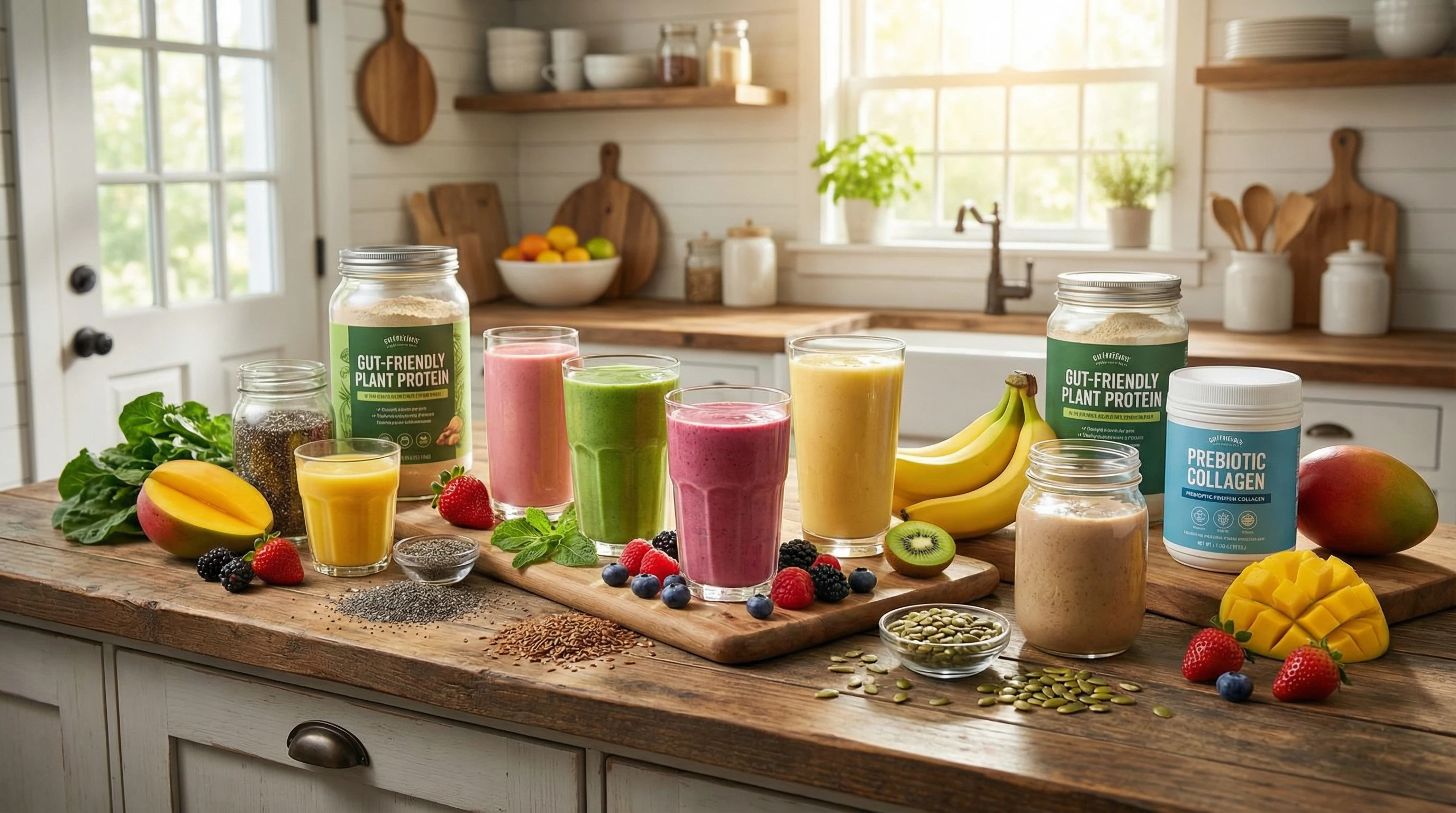
A gut-friendly protein smoothie isn’t just about tossing some powder into a blender. The best ones combine gut-soothing fiber, helpful probiotics, and nourishing protein, all blended together in a tasty, easy-to-digest package. Here’s what I look for when creating one:
- Fiber from Fruit & Vegetables: Fiber feeds your gut bacteria, helping keep your digestion regular and balanced. Good picks are berries, bananas, spinach, and even avocado.
- Probiotic Foods: Ingredients like yogurt, kefir, or probiotic powders add live bacteria that directly support gut health.
- Gentle Protein Sources: Not all proteins are created equal; some are easier on your stomach than others. More on this below.
- Healthy Fats: Things like flaxseed, chia seeds, and nut butters slow digestion just a bit, helping you feel satisfied longer.
The flavors are totally up to you, so feel free to experiment. The real focus is picking ingredients that your stomach will actually enjoy, too. With the right blend, you’re also more likely to meet key nutrition goals for the day.
Which Protein is Best for the Gut?
Finding a protein powder that works for your gut is really important if you want to avoid bloat or digestive issues. Here are some common options and how they interact with gut health:
- Plant Based Proteins (like pea or hemp): These usually have fewer additives and are easier to digest than standard whey, especially for anyone with dairy sensitivity. They include a little extra fiber and may cause less stomach upset. A great affordable option for plant-based protein is Leanfit Plant-Based Protein Powder, which delivers a solid amount of protein per serving using a blend of plant-based sources. It’s dairy-free, easy to mix, and a popular choice for those looking for a simple, no-frills protein powder that fits well into smoothies, shakes, or post-workout meals without a high price tag.
- Collagen Peptides: Collagen is gentle, unflavored, and nonbloating, plus there’s evidence it may help the lining of the gut (source). One collagen supplement I personally recommend is Natural Factors Total Body Collagen. I like this one because it’s a high-quality collagen powder that supports joint health, skin elasticity, hair, and overall connective tissue. It mixes easily into smoothies which makes it simple to use daily. While this is my go-to collagen supplement for quality and results, I know not everyone wants to spend more — so I’ll also share some more affordable collagen powder options that are still worth considering. Vega is also a favorite of mine.
- Whey Protein Isolate: If you don’t have lactose issues, high quality whey isolate is also a solid gut protein. It’s quickly absorbed and often contains bioactive compounds that can help repair the gut.
- Fermented Protein Powders: These go through a fermentation process, making them even easier to digest and often lowering the chances of gas or bloating.
When picking your protein, check for minimal ingredients. Skip artificial sweeteners and gums if your stomach gets fussy easily. Sometimes simple is best. Sticking with clean protein powders is a great way to avoid unexpected digestive reactions and maintain a happy gut.
Which Smoothie is Good for Gut Health?
If you want a smoothie that your gut will appreciate, focus on these go-to ingredients and a sample recipe you can tweak to your liking:
- Banana: Naturally prebiotic and super soothing to the stomach.
- Plain Greek Yogurt or Kefir: Adds protein, calcium, and live probiotics.
- Frozen Berries: Packed with fiber and antioxidants.
- Leafy Greens (like spinach): Gentle and high in fiber—almost tasteless once blended.
- Plant Based Protein Powder: For easy digestion and extra protein.
- Ground Flaxseed: Adds healthy fats and extra fiber.
- Avocado (optional): Adds a creamy texture, healthy fats, and even more fiber without overwhelming flavors.
Sample Gut Health Protein Smoothie:
- 1 ripe banana
- 1/2 cup plain Greek yogurt (or dairy free probiotic yogurt)
- 1/2 cup frozen mixed berries
- 1 handful spinach
- 1 scoop plant based or collagen protein powder
- 1 tablespoon ground flaxseed
- 1/4 avocado (optional)
- 3/4 cup water or almond milk
Blend until totally smooth and enjoy! This combo is great after a workout, as a quick breakfast, or even a calming afternoon snack.
For those who want more variety, switching up the type of berries, adding mango or pineapple, or using coconut milk for a change of consistency can keep things interesting.
What is the Rule of 3 for Smoothies?
The “rule of 3” is a simple way to build smoothies that are balanced and actually satisfying. Here’s what I keep in mind whenever I’m tossing things in the blender:
- Protein to build and repair muscles and help you stay full.
- Fiber from fruits, veggies, or seeds to support digestion and feed gut bacteria.
- Healthy Fats like avocado, nut butters, or seeds for extra staying power and a creamy texture.
If you stick to at least one ingredient from each of these groups, your smoothie will be well rounded and your gut and belly will appreciate it. This rule helps if you’re meal prepping or need to stay full on the go. It can also make shopping and planning ahead much easier.
Using the rule of 3, you can vary your smoothies all week without worrying about missing out on gut loving nutrients.
Is It Okay to Drink a Protein Smoothie Every Day?
For most people, drinking a protein smoothie every day is totally fine, especially if you mix things up with the fruits, veggies, and protein sources to keep your gut bacteria happy and avoid taste fatigue. The main things to watch for are your total daily protein intake and how your stomach feels afterward.
If you notice that your stomach gets upset with certain protein powders, try out alternatives like plant based or fermented options, or swap in Greek yogurt as the main protein source. If you’re using smoothies as meal replacements, make sure you’re still getting enough calories and actual food throughout the day. Listening to your body is always the best approach. Some people also like to log what goes into their smoothie to track which ingredients work best for their gut.
Always check with a nutrition pro if you have specific diet needs or concerns about allergies; a bit of guidance can make your smoothie routine much smoother.
Getting Started: Tips for Gut-Friendly Protein Smoothie Success
Starting a gut healthy smoothie routine is easier than you might think. You don’t need any fancy equipment; just a blender, your favorite protein, and some gut loving add ins. Here are some tips I’ve picked up to help keep things smooth:
- Keep it simple: Don’t feel like you have to use every supplement or superfood. Sometimes just yogurt, banana, and a good protein powder do the trick.
- Rotate your greens: Spinach is mild and easy, but baby kale, arugula, or chard all mix in some variety and keep things interesting.
- Add ins for the win: Ingredients like ground flax, chia seeds, and shredded coconut boost the fiber and give your gut extra support. Try tossing in a probiotic capsule (just open and pour in the powder) for an easy boost.
- Watch added sugar: Some store bought protein powders and yogurts add sneaky sugar that isn’t helping your gut. Look for unsweetened and unflavored options whenever you can.
Minor changes, like adding a scoop of oats, a few slices of avocado, or swapping water for kefir, can make a big difference in flavor and gut benefits. Experimenting allows you to stumble upon your new favorite combinations with little effort.
Prepping frozen smoothie packs in advance is another way to make weekday mornings extra easy. Just add a scoop of protein and liquid and blend for a gut friendly breakfast on the go.
Real World Examples: How Gut Health Smoothies Help Me and Others
I’ve noticed the biggest improvement in my own digestion when I consistently blend up protein smoothies using Greek yogurt, berries and plant based protein powder. My energy has been steadier, and I haven’t had those afternoon slumps like I did when I used to just grab a pastry or skip breakfast entirely.
A friend of mine, who’s vegetarian and has a pretty sensitive stomach, swears by smoothies made with pea protein, plain almond milk, a chunk of frozen banana, and a handful of spinach. She adds a scoop of ground flax for extra fiber and says it makes a massive difference in how she feels throughout her workday.
Another coworker struggled with regular bloating after eating a processed breakfast, but switching to a simple smoothie of unsweetened kefir, blueberries, collagen peptides, and psyllium husk helped her feel more comfortable and focused all morning long.
Small changes add up over time, so even if you only add gut healthy smoothies a couple of times per week, you might notice more comfortable digestion, improved mood, or even clearer skin.
Easy Gut Health Protein Smoothie Add Ins
- Probiotic rich Yogurt/Kefir: Delivers live cultures for digestion support.
- Mango & Pineapple: Enzyme rich fruits that are gentle on the stomach.
- Prebiotic Bananas: Unripe or just ripe bananas for that gut friendly resistant starch.
- Psyllium Husk or Oat Bran: Turbo charges your fiber and adds a creamy texture.
- Ginger: Soothes digestive discomfort and adds a fresh kick.
- Turmeric: Anti inflammatory and gut soothing, best with a pinch of black pepper for absorption.
- Raw Cacao or Cinnamon: Both spices support gut health, add flavor, and have beneficial antioxidants.
Add a small pinch or scoop; it’s easy to overdo it, especially with bold flavors like ginger or turmeric. Remember to taste as you go to keep your smoothie feeling and tasting just right.
Don’t forget, a tablespoon of unsweetened cocoa powder or a spoonful of nut butter can also give your smoothie an extra gut healthy punch and rich taste.
Key Takeaways for Building the Best Gut Health Protein Smoothie
Gut-friendly protein smoothies are quick to prep and super easy to adjust based on your needs. By focusing on fiber rich fruits, leafy greens, easy on the gut protein sources, and a dash of healthy fats, you’re setting yourself up for better digestion and a happier gut in no time. With a little experimenting and routine, you’ll stumble upon combos that work for you, taste amazing, and leave you feeling pretty great all day long.
Start blending and watch how quickly gut loving smoothies make a difference in your overall health and daily routine!